


Tinnitus, commonly described as ringing, buzzing, hissing, or other sounds perceived in the ears, may be associated with Temporomandibular Joint (TMJ) disorders in some patients. Because the jaw joint, surrounding muscles, and ear structures share close anatomical and neurologic relationships, TMJ dysfunction can contribute to the development or worsening of tinnitus symptoms.
The Jaw–Ear Connection
The relationship between TMJ disorders and tinnitus, often referred to as somatic tinnitus, is believed to involve several mechanisms:
Nerve Interactions
The trigeminal nerve, which provides sensation to the face and helps control jaw movement, has connections with neural pathways involved in hearing and sensory processing. Irritation or dysfunction affecting the TMJ and associated muscles may influence these pathways and contribute to tinnitus symptoms.
Muscle Dysfunction
The muscles responsible for chewing and jaw movement are located in close proximity to structures associated with the middle ear. Increased muscle tension, inflammation, clenching, or grinding of the teeth may alter sensory input around the ear and contribute to symptoms such as ringing, pressure, fullness, or discomfort.
Joint Inflammation
Inflammation or structural changes within the TMJ may affect surrounding tissues and contribute to referred symptoms involving the ear, face, head, and neck.
Signs That Tinnitus May Be TMJ-Related
Certain findings may suggest that TMJ dysfunction is contributing to tinnitus symptoms:

Changes in the pitch, intensity, or character of the tinnitus during jaw movement, chewing, clenching, or yawning
Jaw clicking, popping, locking, pain, or stiffness
Facial muscle tenderness
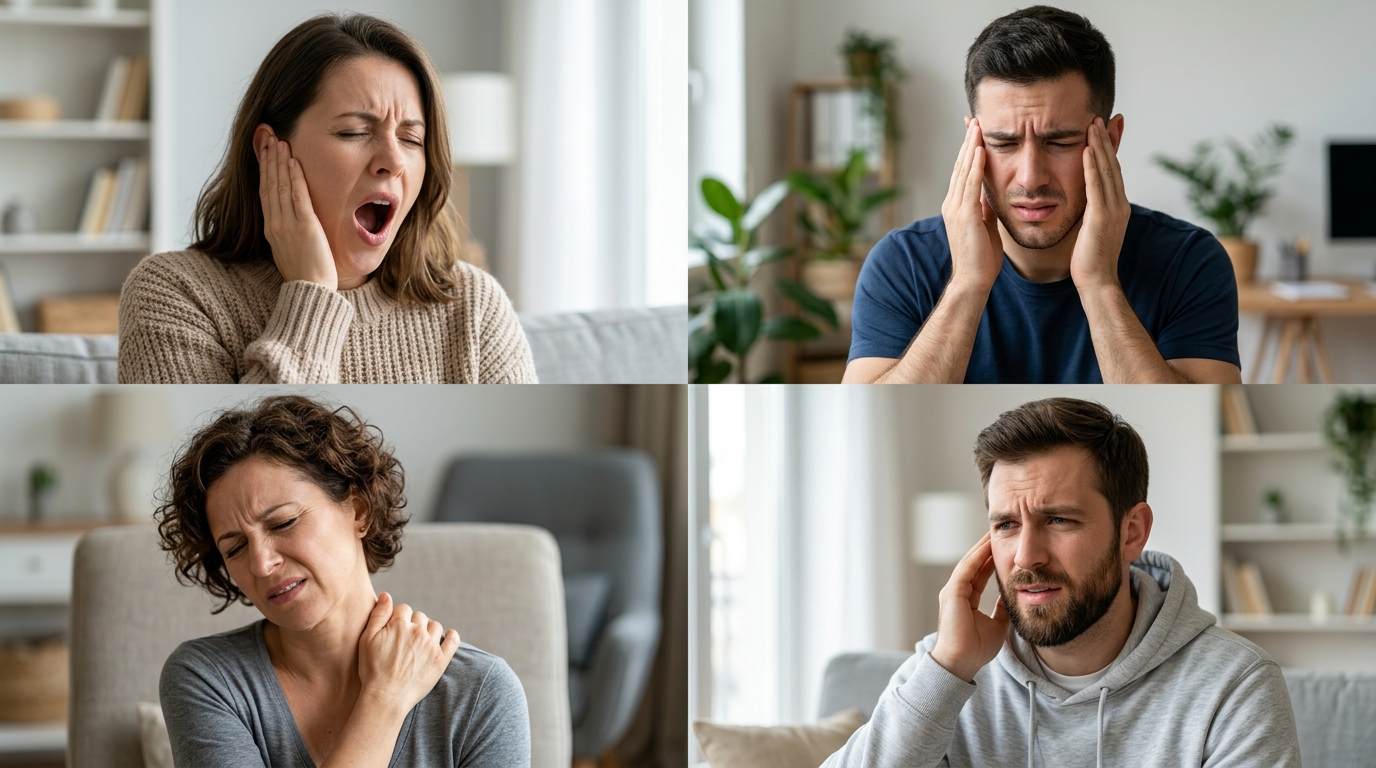
Frequent headaches, temple pain, neck pain, or shoulder discomfort
Symptoms that worsen during periods of increased stress or teeth grinding (bruxism)
Ear fullness or pressure without evidence of ear disease
Diagnostic Evaluation
A comprehensive evaluation is necessary to determine whether TMJ dysfunction may be contributing to tinnitus symptoms.
The diagnostic process typically begins with a thorough clinical examination and review of the patient's symptoms and medical history. Imaging studies, including CT scans of the TMJs may be used to evaluate joint anatomy, degenerative changes, joint damage, or structural abnormalities.
When imaging findings correlate with clinical symptoms and examination findings, TMJ dysfunction may be considered a contributing factor in the patient's tinnitus. Because tinnitus can arise from many different causes, additional evaluation by an Ear, Nose, and Throat (ENT) specialist or other healthcare providers may be recommended.

Other Potential Causes of Tinnitus
Tinnitus may have numerous causes, including but not limited to:
Exposure to loud noise
Age-related hearing loss
Ear infections
Viral illnesses
Head or neck injuries
Certain medications
Vascular disorders
Neurologic conditions
Heavy metal exposure
Chronic health conditions
Parasitic infections
Kidney illness
A comprehensive evaluation is important to identify contributing factors and guide to treatment recommendations.
Treatment Options
When TMJ dysfunction is identified as a contributing factor, treatment is directed toward improving jaw function and reducing stress on the joint and surrounding muscles.
Common treatment approaches may include:
Oral Appliances
Custom-fitted oral appliances or night guards may help reduce clenching and grinding forces and decrease stress on the TMJs.
Physical Therapy
Targeted exercises and manual therapy techniques may improve jaw mobility, reduce muscle tension, and improve the function of the jaw, neck, and surrounding structures.
Stress Management
Stress reduction strategies, relaxation techniques, biofeedback, and counseling may help decrease parafunctional habits such as clenching and grinding.
Dental and Occlusal Evaluation
In selected cases, evaluation of the bite and dental alignment may be recommended to determine whether occlusal factors are contributing to TMJ dysfunction.
Prognosis
Treatment outcomes vary depending on the severity and duration of symptoms, the underlying cause of the tinnitus, and patient-specific factors. Patients whose tinnitus is significantly influenced by TMJ dysfunction may experience improvement when the underlying jaw disorder is appropriately treated. However, no treatment can guarantee complete resolution of tinnitus in all cases.
Hollie


David
Jennifer
Joanne
Kaye
Stop Letting Pain Hold You Back
Start your personalized treatment today and take the first step toward lasting relief.
Your Health Is Our Priority
Relieve TMJ and other head pain symptoms with custom treatments tailored to your specific problem.
 Request a Consultation
 Contact Us